
Diner in the Storm is a compact narrative escape game about taking shelter, understanding a threat, and deciding how to help the people inside. Diner in the Storm uses a small side-view space, but each conversation and object can change what the player knows. This guide remains spoiler-conscious: it explains how to investigate, connect evidence, and test decisions without listing a complete solution sequence. Open Diner in the Storm while reading and let Diner in the Storm reveal the story at its intended pace.
The title, controls, thumbnail, and iframe came from the GameMonetize newest HTML5 publisher feed. Diner in the Storm returned HTTP 200 without frame-blocking headers and displayed its interactive Begin screen before publication.
Map the Diner
Walk the Full Interior First
Begin Diner in the Storm by moving through every safe part of the room before choosing an exit. A complete first walk reveals character positions, doors, windows, unusual props, and the limits of the playable space. Diner in the Storm is easier to reason about when the player knows where each conversation and object lives. Do not rush through the first prompt simply because the storm creates urgency. Instead, let Diner in the Storm establish a mental map. When new information appears, that map tells Diner in the Storm where to return and prevents repeated movement with no investigative purpose.
Mark Interactive Details
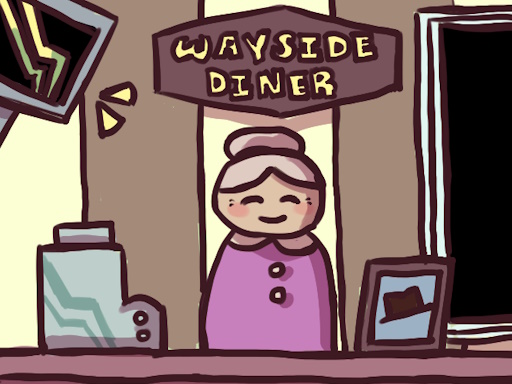
The hand-drawn style makes Diner in the Storm readable, but not every useful object announces itself. Notice items with a clear outline, an unusual position, a visual contrast, or a connection to something a character mentioned. Test one Diner in the Storm detail at a time and read the response completely. If the object does nothing, remember the location rather than clicking it repeatedly. Diner in the Storm may require context before an interaction matters. A short list of unresolved details gives Diner in the Storm a better next route than random movement and preserves the story's logic.
Read Conversations as Clues
Identify Each Person's Concern
Every Diner in the Storm character has a different reason to stay, leave, doubt, or wait. Read dialogue for the concern beneath the words: fear, disbelief, responsibility, missing evidence, or attachment to another person. Diner in the Storm persuasion works when information answers that specific concern. Repeating a warning that already failed usually adds nothing. Instead, let Diner in the Storm gather a clue that changes the argument. After each conversation, summarize the obstacle in one sentence. That sentence becomes the Diner in the Storm objective for the next exploration pass and keeps character stories separate.
Revisit Dialogue After Discoveries
A refusal in Diner in the Storm is not necessarily a permanent endpoint. New evidence can unlock a different response or make an earlier statement meaningful. Whenever Diner in the Storm reveals a major clue, revisit the people most directly connected to it. Do not repeat every conversation automatically; choose the character whose concern the clue addresses. This targeted loop keeps Diner in the Storm efficient and makes dialogue changes easier to notice. If no response changes, the evidence may belong to another person or require one more step. Diner in the Storm then has a narrower question for the next search.
Build an Evidence Chain
Connect Statements to Objects
Diner in the Storm often places narrative information in both dialogue and the environment. A statement may identify what to inspect, while an object may prove why the statement matters. Link the two before acting. When Diner in the Storm presents a suspicious detail, ask who would care about it and what belief it could change. When a character mentions a problem, ask which diner object could confirm or solve it. This two-way method turns Diner in the Storm exploration into an evidence chain. It also reduces false leads because each Diner in the Storm interaction has a proposed relationship rather than a random target.
Preserve the Order of Discoveries
Some Diner in the Storm interactions depend on order. The player may need to hear a concern before an object becomes relevant, or inspect evidence before a character accepts it. If a plausible action fails, do not discard the idea immediately. Diner in the Storm should check whether a prerequisite is missing. Reconstruct the recent sequence: conversation, location, object, response. Then change one step and test again. This approach lets Diner in the Storm distinguish a wrong connection from a correct connection attempted too early. The resulting order becomes a reliable Diner in the Storm route for later playthroughs.
Manage Exterior Risk
Treat Leaving as a Test
The outside world is the central risk in Diner in the Storm, so crossing a boundary should answer a question. Before leaving safety, decide what Diner in the Storm expects to learn or accomplish and what evidence supports the attempt. If the game returns a dangerous result, record the missing preparation instead of repeating the same exit. Diner in the Storm uses consequences to teach its rules. A controlled test protects progress because it changes one assumption at a time. When the preparation becomes stronger, Diner in the Storm can try the boundary again with a clear reason rather than relying on luck.
Keep a Safe Return Route
Movement in Diner in the Storm is simple, but position still matters when danger appears. Know which direction returns to shelter and avoid advancing while dialogue or visual cues remain unread. If Diner in the Storm introduces a timed or threatening moment, prioritize safety before optional inspection. Once the player is secure, the new observation can be connected to the evidence list. This habit prevents one surprising event from erasing the value of careful investigation. Diner in the Storm rewards attention, and a safe return lets Diner in the Storm convert an exterior clue into useful interior conversation.
Plan the Group Escape
Solve People Individually
The goal of Diner in the Storm is not only to move the player character. Other people may need separate reasons, and one successful conversation does not automatically solve the group. Track each Diner in the Storm person as ready, unresolved, or dependent on someone else. Work on one unresolved concern at a time. This avoids mixing clues and makes the next destination obvious. When a character changes position or response, update the list before continuing. Diner in the Storm becomes much clearer when group progress is treated as several linked personal decisions rather than one universal speech.
Confirm Readiness Before Committing
Before a major Diner in the Storm exit attempt, make a final interior pass. Check whether important characters have acknowledged the danger, whether unresolved objects still suggest missing evidence, and whether the route outside is understood. Diner in the Storm may still contain surprises, but preparation should be deliberate. If someone remains unconvinced, return to that person's exact concern instead of trying the exit repeatedly. A readiness check gives Diner in the Storm a stable baseline. Later playthroughs can shorten the route, but the first successful Diner in the Storm escape should preserve every confirmed dependency.
Use Controls Deliberately
Separate Movement and Interaction
Diner in the Storm uses A/D or the arrow keys for movement and Space or visible clicks for dialogue and interaction. Move into position, stop, and then interact. Pressing several keys at once can skip a line or make it unclear which object Diner in the Storm accepted. If input does not respond, click inside the game frame before trying again. Read every Diner in the Storm response before walking away because even a failed action can identify a requirement. Slow controls support fast reasoning: Diner in the Storm only needs a few inputs, so each input should have a named purpose.
Protect Important Dialogue
Narrative games lose clarity when text is advanced too quickly. In Diner in the Storm, pause after each dialogue panel and separate facts from mood. A frightened statement can still contain a concrete clue about an object, location, or dependency. If Diner in the Storm presents a choice, predict the likely effect before selecting it. That prediction makes the response useful even when the choice fails. Avoid clicking through Diner in the Storm simply to reach movement again. The conversations are part of the puzzle system, and preserving them gives Diner in the Storm the evidence needed for a controlled route.
Review Failed Attempts
Name the First Missing Link
When Diner in the Storm reaches a bad outcome, identify the first missing link rather than the final consequence. The real error may be an unread conversation, an uninspected object, a character revisited too early, or an exit attempted without proof. Replay Diner in the Storm to that point while keeping successful steps unchanged. Test one missing link and observe whether the next response differs. This review style gives Diner in the Storm a useful experiment. Changing the entire route at once may succeed, but it will not explain why; one controlled Diner in the Storm change builds knowledge that lasts.
Decision Review
Check the Twelve Investigation Decisions
- Diner in the Storm maps the room before Diner in the Storm chooses an exit, so Diner in the Storm knows every return point.
- Diner in the Storm tests one unusual detail, lets Diner in the Storm read the response, and gives Diner in the Storm a new clue.
- Diner in the Storm names each concern before Diner in the Storm argues, helping Diner in the Storm match evidence to people.
- Diner in the Storm revisits only relevant dialogue after Diner in the Storm learns a fact, so Diner in the Storm notices changes.
- Diner in the Storm connects a statement with an object, then Diner in the Storm asks who needs what Diner in the Storm found.
- Diner in the Storm checks prerequisites when Diner in the Storm sees a failed action instead of making Diner in the Storm repeat it.
- Diner in the Storm states a purpose before Diner in the Storm goes outside, allowing Diner in the Storm to interpret consequences.
- Diner in the Storm remembers the safe direction while Diner in the Storm explores, giving Diner in the Storm a controlled retreat.
- Diner in the Storm tracks people individually because Diner in the Storm knows that Diner in the Storm cannot use one argument for all.
- Diner in the Storm confirms readiness before Diner in the Storm commits, so Diner in the Storm preserves every proven dependency.
- Diner in the Storm separates movement from interaction; Diner in the Storm reads first, and Diner in the Storm moves second.
- Diner in the Storm changes the first missing link while Diner in the Storm keeps working steps, letting Diner in the Storm compare results.
Next Session Checklist
Keep the Mystery Measurable
Start Diner in the Storm with a complete room walk, record every person's concern, and mark objects that appear connected to those concerns. Build one evidence relationship, revisit the relevant conversation, and approach the exterior only with a stated purpose. Before committing to an escape, confirm each person's readiness and preserve a safe return direction. If Diner in the Storm produces a bad result, change the first missing dependency and replay the confirmed sequence. Return to Diner in the Storm with one question, then let Diner in the Storm answer it through dialogue or consequence.