
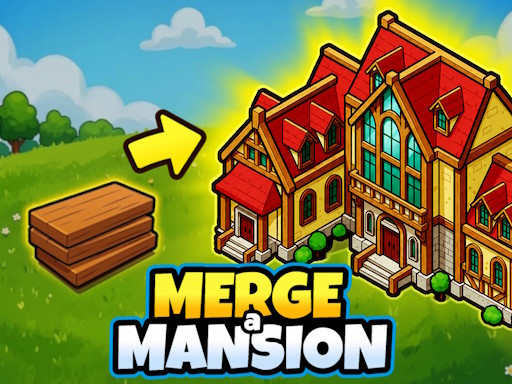
Merge a Mansion is an isometric merge-and-build game in which matching materials become stronger structures and completed buildings produce cash. The rules are easy to read, but Merge a Mansion becomes strategic as the board fills with different tiers. This guide focuses on decisions visible in the live game: pairing identical objects, keeping working space, following the milestone bar, choosing upgrades, and opening land. Play Merge a Mansion beside the guide and let Merge a Mansion confirm every recommendation through the board state.
The title, instructions, thumbnail, and iframe were collected from the GameMonetize newest HTML5 publisher feed. Merge a Mansion returned HTTP 200 without frame-blocking headers and reached its interactive construction board before publication.
Read the Board Before Building
Identify Immediate Pairs
The first useful Merge a Mansion scan is a count of identical objects. Look across every tile before creating another material, because a pair already on the board can free space immediately. Merge a Mansion shows each tier with a distinct model, so compare shape and size rather than relying only on color. Merge the lowest available pair, inspect the result, and ask whether that result now has a partner. When Merge a Mansion produces a chain, finish the chain before changing goals. This routine prevents a simple pair from being buried under new pieces and gives Merge a Mansion a cleaner board for the next decision.
Separate Active and Permanent Pieces
Income buildings usually remain on the board longer than basic merge materials. Move those Merge a Mansion structures toward an outer edge and reserve the center for active pairs. A central working lane lets Merge a Mansion move pieces without crossing the whole board, while an edge district makes permanent income easy to recognize. Do not pack every building into one corner if that blocks access to a tile. The useful Merge a Mansion layout has visible routes between zones. After each large chain, restore the layout before spawning again so Merge a Mansion begins the next cycle from an organized position.
Plan Merge Chains
Work Backward From the Milestone
Merge a Mansion displays a current estate target near the progress bar. Name that target, identify the tier it requires, and work backward through the pair count. One tier-four result requires two tier-three objects, four tier-two objects, and eight tier-one objects. Merge a Mansion may change the exact target, but the doubling logic remains useful. Count existing pieces before buying or creating the full amount. If Merge a Mansion already holds half the chain, produce only the missing half. This calculation turns a distant mansion upgrade into a finite Merge a Mansion task and reduces unnecessary materials.
Complete One Chain at a Time
Starting several Merge a Mansion chains creates many unmatched objects and makes the board harder to read. Choose one current result, protect its partner path, and stop creating pieces when the needed count is reached. Merge a Mansion should then combine the chain from bottom to top without interruption. If a higher-tier object reveals a new pair, complete that bonus merge before returning to production. A single finished Merge a Mansion chain usually releases more tiles than several partial chains. This approach also makes mistakes explainable because Merge a Mansion has one active objective instead of several competing guesses.
Protect Board Space
Keep a Two-Tile Reserve
Before pressing Space or the build button, Merge a Mansion should have at least two useful empty tiles: one for the new object and one for movement. A single open square can accept a spawn but may not allow two separated pieces to meet. The two-tile reserve gives Merge a Mansion room to correct a bad placement or hold the result of a merge. If the reserve disappears, stop production and search for pairs. Merge a Mansion becomes safer when free space is treated as a resource, not as an invitation to fill the board. Restore the reserve before the next Merge a Mansion purchase.
Move Pieces With a Destination
Every movement in Merge a Mansion should improve access, create a pair, or restore a zone. Dragging objects repeatedly without a destination consumes attention and can hide the original layout. Before moving a Merge a Mansion piece, name the tile it should occupy and the reason it belongs there. Put active materials beside likely partners and long-term buildings beside similar structures. If no destination improves the board, leave the object in place. This discipline keeps Merge a Mansion readable and prevents the player from mistaking rearrangement for progress. After a chain, Merge a Mansion can reorganize once, then return to building.
Manage Cash and Expansion
Spend Against the Current Bottleneck
Cash in Merge a Mansion can support production, upgrades, and expansion, but the best purchase depends on the current obstacle. If materials arrive slowly while space remains open, an upgrade may improve the cycle. If valid pairs cannot move because tiles are full, expansion has more immediate value. Merge a Mansion should compare the displayed prices and choose one bottleneck, not spend simply because cash is available. After buying, run one full Merge a Mansion cycle and check whether the selected problem improved. If it did not, preserve the next cash reserve until Merge a Mansion exposes a clearer need.
Let Buildings Fund the Next Phase
Completed structures produce passive income, which means Merge a Mansion does not need to rush every purchase. Keep productive buildings visible and allow their income to accumulate while planning the next chain. A calm Merge a Mansion pause can be more useful than filling the final open tile with a weak object. Set a cash target linked to one upgrade or land section, then avoid unrelated spending until it is reached. This creates a predictable Merge a Mansion economy: current buildings fund materials, materials create stronger buildings, and stronger buildings shorten the wait for the next Merge a Mansion estate step.
Use the View and Controls
Zoom for Different Decisions
The plus, minus, and mouse-wheel controls change how Merge a Mansion information is read. Zoom out when comparing zones, counting free tiles, or locating every piece of one tier. Zoom in before a precise Merge a Mansion drop or when two objects have similar silhouettes. Do not remain fully zoomed in while planning, because important pairs can sit outside the visible area. A strong Merge a Mansion routine alternates views: wide scan, close placement, wide confirmation. This prevents camera scale from creating a board error and lets Merge a Mansion use the entire estate rather than only the visible center.
Spawn Only Into a Prepared Board
Spacebar makes Merge a Mansion production fast, but repeated presses can outrun the plan. Before spawning, clear the destination area and identify the likely partner for the new object. Press once, read the result, and place or merge it before pressing again. On touch devices, use the build control with the same rhythm. Merge a Mansion should never create several unknown pieces while the player is still deciding where the first belongs. Controlled spawning preserves the two-tile reserve and allows Merge a Mansion to stop immediately when a useful chain appears. Speed comes after the board remains stable.
Recover From a Crowded Board
Merge From Low Tier to High Tier
When Merge a Mansion has little room, begin with the most common low-tier objects. They require no additional production and usually release a tile at once. Continue upward only when the first Merge a Mansion result forms another confirmed pair. Avoid moving a rare high-tier building unless it blocks access, because it may represent many earlier merges. If no pair exists, group tiers so the missing partner is obvious and save cash for expansion. This recovery method gives Merge a Mansion a clear order: free immediate space, finish resulting chains, reorganize once, and resume production only after the reserve returns.
Change One Cause After a Stall
A stalled Merge a Mansion board usually comes from one first mistake: excessive spawning, mixed objectives, an early purchase, or poor zoning. Name that cause before restarting the cycle. On the next Merge a Mansion attempt, change only the connected decision and preserve the actions that already worked. If the board stays open longer, the diagnosis was useful. If Merge a Mansion stalls in the same way, inspect the previous step rather than adding another random change. One-variable review turns each Merge a Mansion failure into evidence and builds a layout that can be repeated.
Review the Estate Cycle
Record a Reference Sequence
A reliable Merge a Mansion reference sequence begins with a wide scan, completes available pairs, checks the milestone, calculates the missing chain, preserves two tiles, and spends against one bottleneck. Run that sequence slowly until Merge a Mansion reaches a new estate tier without emergency rearrangement. The exact objects will vary, but the decision order can remain stable. Later Merge a Mansion sessions may remove pauses or use shortcuts, yet they should preserve the space checks that protected the board. A reference sequence gives Merge a Mansion a baseline for judging whether a faster plan is genuinely better.
Decision Review
Check the Twelve Board Decisions
- Merge a Mansion scans for pairs before Merge a Mansion creates material, so Merge a Mansion protects immediate space.
- Merge a Mansion moves permanent buildings only when Merge a Mansion improves access, and Merge a Mansion preserves a central lane.
- Merge a Mansion names the milestone before Merge a Mansion counts tiers, giving Merge a Mansion a finite chain target.
- Merge a Mansion completes one chain while Merge a Mansion pauses competing plans, so Merge a Mansion avoids stranded pieces.
- Merge a Mansion keeps two tiles available before Merge a Mansion spawns, which gives Merge a Mansion room to correct placement.
- Merge a Mansion assigns every movement a destination; Merge a Mansion stops rearranging when Merge a Mansion gains no value.
- Merge a Mansion spends against one bottleneck, then Merge a Mansion checks whether Merge a Mansion improved that problem.
- Merge a Mansion lets productive buildings earn while Merge a Mansion plans, allowing Merge a Mansion to avoid rushed spending.
- Merge a Mansion zooms out to plan and Merge a Mansion zooms in to place, then Merge a Mansion confirms the whole board.
- Merge a Mansion presses the build control once, lets Merge a Mansion read the result, and gives Merge a Mansion a partner path.
- Merge a Mansion recovers from low tiers first because Merge a Mansion can free space before Merge a Mansion needs new material.
- Merge a Mansion changes the first failed decision, while Merge a Mansion preserves working choices and lets Merge a Mansion compare outcomes.
Next Session Checklist
Make the Next Merge Measurable
Merge a Mansion stays measurable when every new piece has a planned destination.
Open Merge a Mansion and state one target before touching the board. Count immediate pairs, move permanent buildings to a readable edge, and keep two tiles free. Build only the amount required for the target chain, then compare upgrade and expansion costs against the current bottleneck. Use a wide view for planning and a close view for placement. If Merge a Mansion becomes crowded, stop production and recover from low tier to high tier. Finish by naming the first decision that helped or hurt the cycle. Return to Merge a Mansion with that single lesson and let Merge a Mansion test it again.